Most home servers today are, to put it bluntly, “big and not too bright”. Typically, they have lots of storage to hold photographs, videos, and documents. Featuring large hard drives for storage, they may only have enough of a processor and memory to run simple programs like Plex, but not much more. A dedicated NAS or even a hand-me-down PC might serve for hardware.
UGREEN has an ambitious vision for the future of home servers in which they might actually be the most powerful computing device in your home: The Local AI Home Server. They reason that privacy and cost factors associated with AI services like ChatGPT and Gemini are barriers to consumer adoption. Rather than open-ended pricing models associated with on-line services, they propose substituting AI models running on the home network for the whole family, with nothing going up to the cloud.
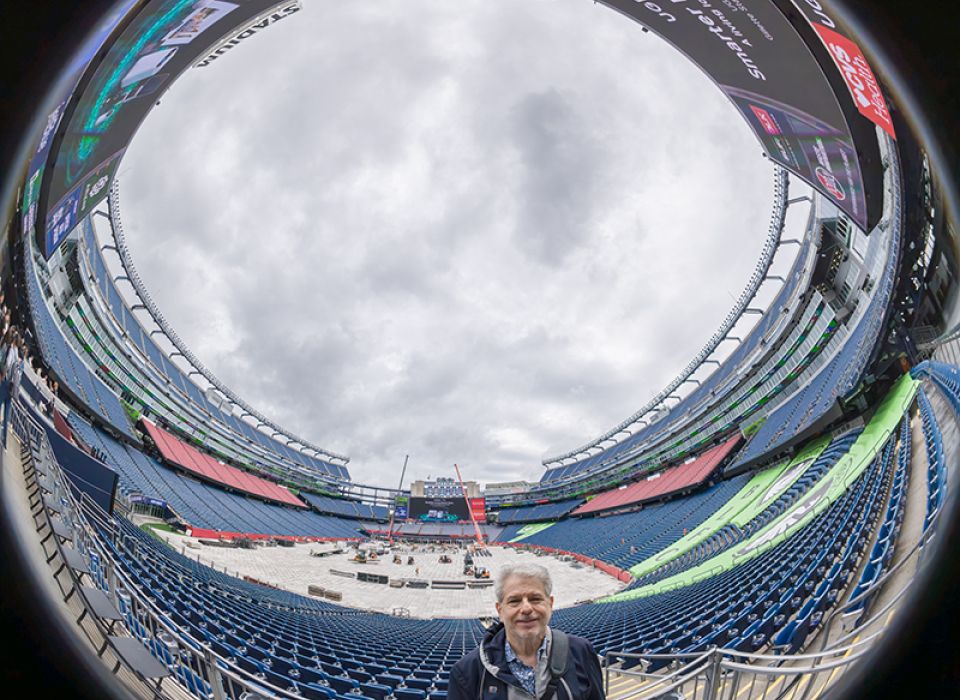
Three server models, together with a supporting eco-system of enabled smart devices, were announced at a press event they flew me into Gillette Stadium, home of the New England Patriots, and provided meals and housing while I was there. The company used the event to tout New England Patriots cornerback Christian Gonzalez as a spokesperson for the line through this year’s season. The company will also host a watch party on December 10 in Boston further emphasizing the connection between the team and UGREEN.
Even though many of us have home servers, it remains to be seen whether consumers will be willing to add this new class of home appliance to their network. All three of UGREEN’s new machines cost more than most dishwashers, and one costs more than all the appliances in my kitchen combined. In other words, this is the bootstrapping of a whole new and potentially costly category. First, UGREEN will need to educate the consumer on what an AI server can do, and then convince them that it is safe and worth the price.
As an aside, I recently learned that even though tea was grown in India, it was originally not enjoyed there by the local people. Wild tea was native to Assam, commercial domestic consumption was engineered by massive British marketing campaigns extolling the virtues and pleasures of Chai to India. It lucratively paid off, creating a huge new market. So, yes, you can create a market, but it can be a challenge; just ask SONY about the Betamax.
That UGREEN chose this moment to launch a new category puts them dangerously on the cutting-edge at one of home-computing’s most challenging times: The price of RAM and storage is soaring, pushing the price of new gear beyond the reach of many. At the same time the very idea of “AI” is at once polarizing as a great convenience or a menacing threat.
The first leg of UGREEN’s strategy is to say, “You’re already sending important data out to the cloud with your Ring doorbells, surveillance cameras, smart picture frames, and media players. Every time you control a device with Alexa, Siri, or similar services, you’re also exposing your home to the Internet. Using our technology you can keep it local and away from unknown, prying, possibly malicious eyes.” In other words, use our servers to recapture your privacy!
Next, UGREEN argues that you can save money by moving your AI in-house with a local server. Between the costs for home surveillance and AI subscription/token fees, you might save money by self-hosting. This was part of the motivation for me when I purchased a Mac for home-hosted AI.
Finally, a turnkey AI solution should be easier to set up, bypassing the hours and days of research I had to put in before Ollama and I could converse.
To that end UGREEN proposes an integrated ecosystem to automate your home while minimizing what you divulge, spend and pay on-line. The challenge will be to make the system seem cheaper, easier to run, more capable, and less scary than what people are using right now. I think the initial foray has been a mixed bag in terms of its messaging and results.
The Three Servers of the Ram-pocalypse
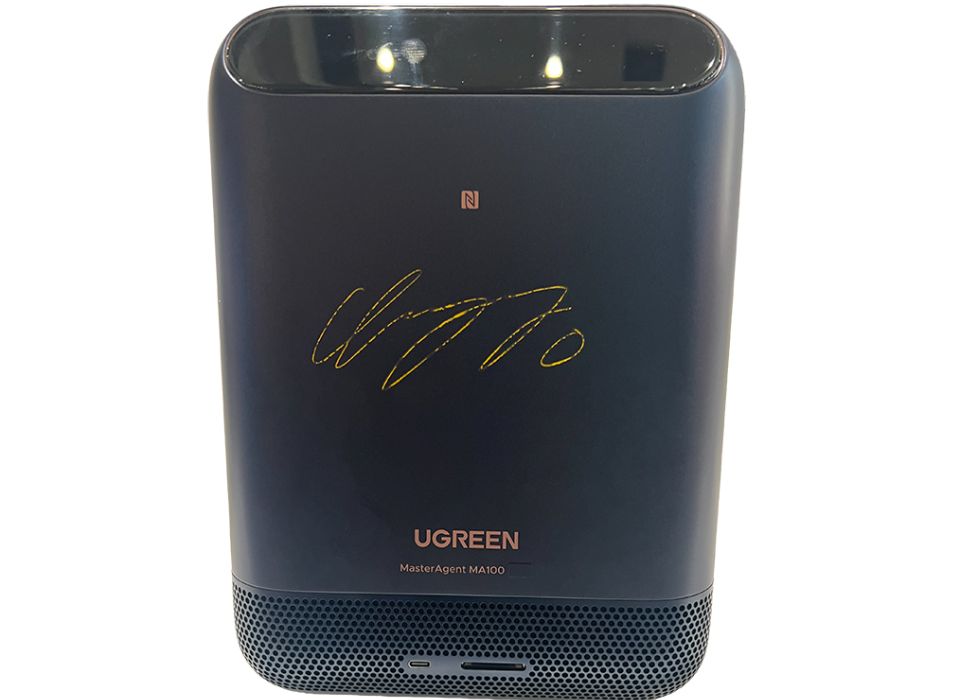
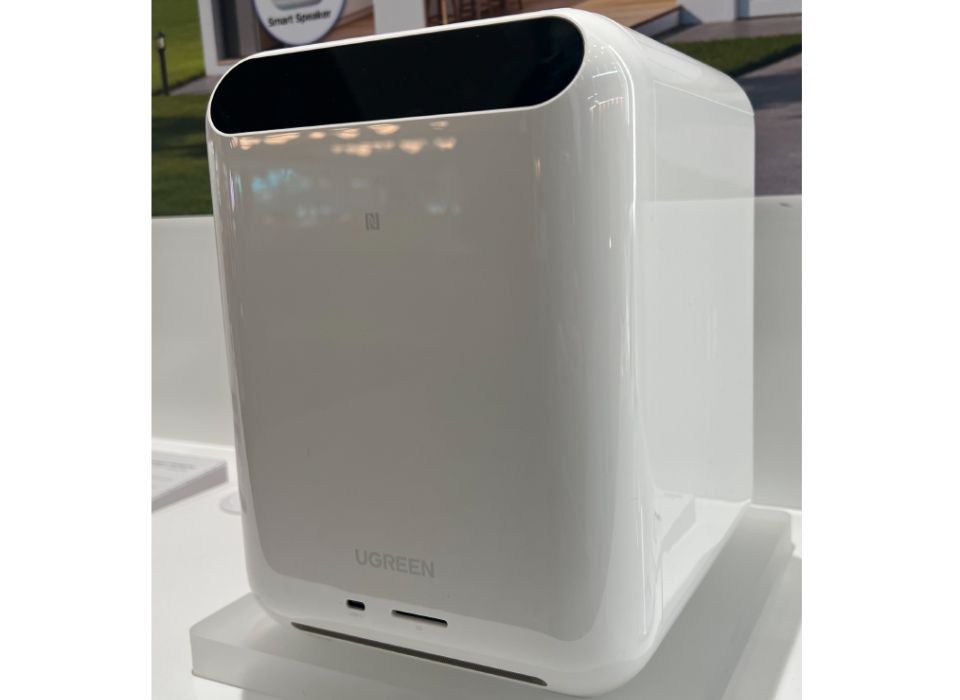
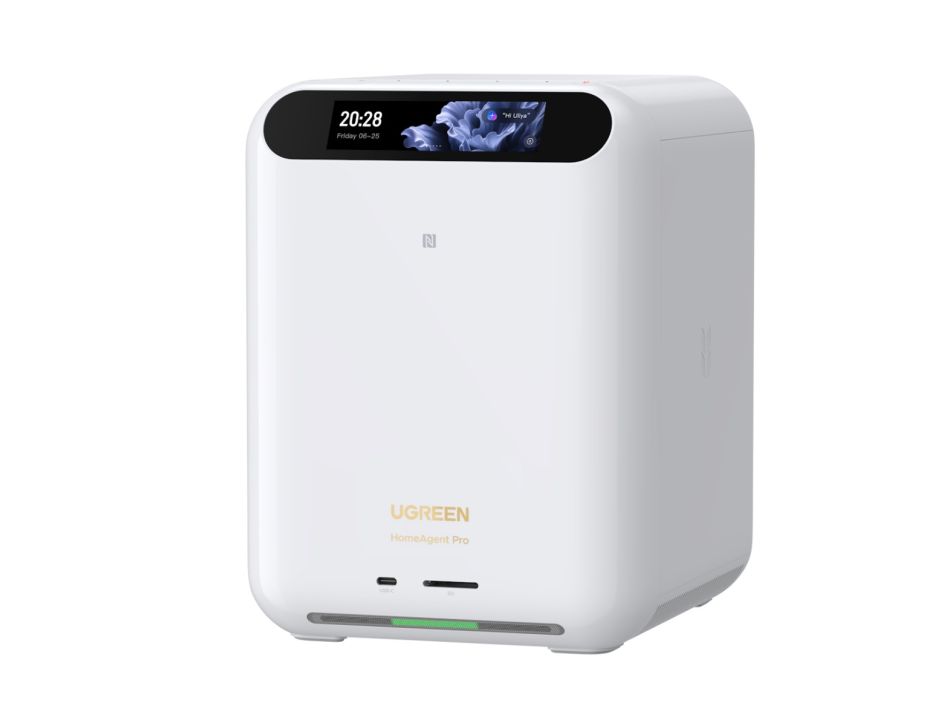
Three servers were on display: The white Home Agent HA100 and Home Agent HA100 Pro, both look very much the part of a family-friendly appliance that would not be out of place on a kitchen or living room shelf.
The same cannot be said for the flagship model designed and priced for enterprise/prosumer labs or high-net-worth home automation. The ominously named Master Agent server, calls to mind images of the Matrix. Even its powerhouse of a CPU, the NVIDIA Jetson Thor T-5000 harkens back to a cartoon, a god, and the autonomous killing machine, the T-800 from Terminator 2, which is celebrating the 30th anniversary of its release this year. Fiction becoming reality?
Perhaps when trying to promote a kumbaya gestalt it isn’t wise to swaddle your device in a black shell reminiscent of Darth Vader’s helmet. Did they reason that the market for nearly $20,000 servers is going to be more easily won over to the Dark Side than the rebel alliance?
The processors of the three units are clearly fit for different levels of work. The RK3588 of the HA100 is an embedded edge-computing standard, the CIX P1 is built to compete in the desktop-class "AI PC" arena, and the T5000 is essentially a data-center-grade AI supercomputer compressed into an embedded System-on-Module (SoM). This is a very broad lineup, featuring servers that will likely be very different in what they can meaningfully perform.
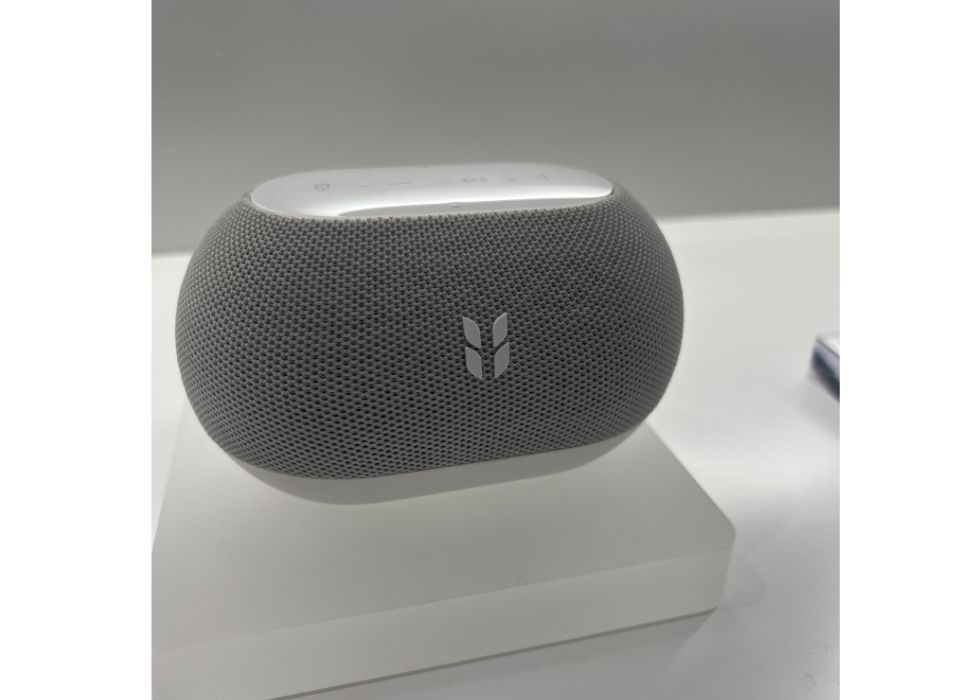
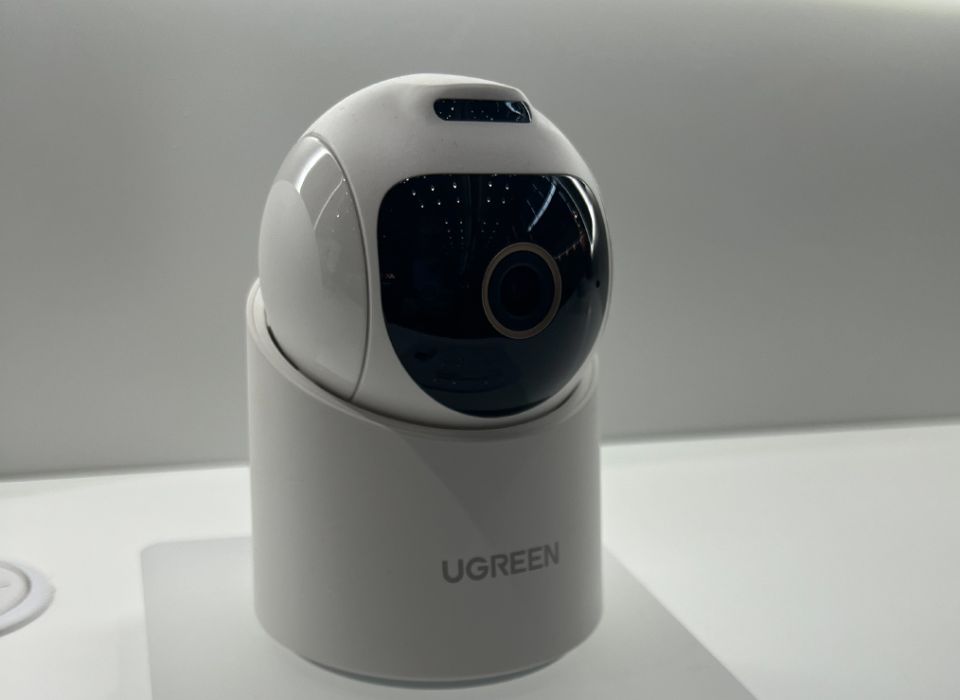
Augmenting the servers are network enabled speakers, indoor and outdoor cameras, and a photo frame. They also demonstrated “Internet of Things” tech in the form of automated curtains that could be activated by the system through voice control. Speaking of which, they named their virtual assistant “Uliya”, (pronounced Yoo-Lee-ah) which is activated by saying “Hi Uliya”. Try saying that three times fast.
The company promises that the home servers will be able to control devices from third parties locally via open protocols. It does not list what companies will participate, but that will be an essential factor to wide adoption. If the server can’t control the many devices in our homes that already exist (but which currently require internet access to work) then it doesn’t obviate the need for internet connectivity, one of the line’s main selling points. Replicating the integration-control of Alexa and similar devices will be a necessary but difficult hurdle for this market if UGREEN is to compete.
The Power of Local: A Net Plus?
I am not sure that UGREEN made its case that the intrusiveness of local AI enabled devices makes them worth the investment. For instance, a major part of the presentation was devoted to the power of connecting cameras to the home network, replacing the internet connected cameras many use to monitor their homes. This video shows a bit of the pitch:
Things got a little strange with the company’s suggestion that cameras strategically located in the home could build memories that would otherwise be lost. AI, they said, would scan a day’s “special events” and pull out a daily highlight reel.
I think it strains credulity that most Americans will think that an always-on video recording device would be a good idea even if it was air-gapped from the internet.
I can only imagine the many “special events” that are best left to the dustbin of history. What they call “Treasured Moments” might include things that are best forgotten: All those simple dust-ups, disagreements with children and spouses, the things you might have wished were never said, not to mention recorded in living color. Oh yes, no one needs to see those other “moments” when you might not be, “ahem”, dressed (if at all) as you want to be for a camera. The idea of living with always-on cameras inside the house might have seemed good on first blush, but after consideration appears off-message and dystopian the more you think about it.
AI does bring benefits to surveillance. Having the ability to search many hours of video by keyword could be a huge boon, saving lots of time. But is that worth the investment of a new appliance?
UGREEN emphasized that the devices could eliminate cloud storage fees, but keep in mind that best practices, even for home data, require some offsite storage.
It’s the System, Stupid
The hardware looks good. UGREEN is known for its design and reliability. But, is this enough? Have they built the infrastructure needed to fully integrate a home’s devices? It is too early to tell. That is why we test.
My home houses more than an average number of “smart” devices that are only as intelligent as the connection to the internet is strong. It would make me extremely happy if UGREEN can integrate my digital devices, smart TVs, stereo system, kitchen appliances, curtains, and cameras into a cohesive system that operates locally, even if the internet is down. I can hope for the promised future, even while being skeptical. As Ronald Reagan said, “Trust, but verify”.
UGREEN’s new class of servers will only be as good as the software that powers them. How easy will it be to setup? How easy to modify? What large language models will they be able to host, and how fast will they run? How will third-party devices and programs be integrated? How many will be willing to buy into UGREEN’s Kickstarter campaign while so many of these questions are up in the air? Will consumer’s accept a “Trust me, Bro” on purchases of this size in a new category of devices?
The promise of local third-party control sounds great on paper, but in practice, it means stepping into an integration minefield. The smart home industry has spent years chasing true interoperability, finally landing on open standards like Matter and Thread, while power users have built vast, self-hosted empires on platforms like Home Assistant. How UGREEN works with current standards will tell its future.
The company is already a respected manufacturer of NAS devices. Will these new servers, particularly the lower end models, really offer more for the average home user than the relatively low-cost non-AI servers UGREEN also manufactures? It remains to be seen and tested. The future is, at least in part, in UGREEN’s hands