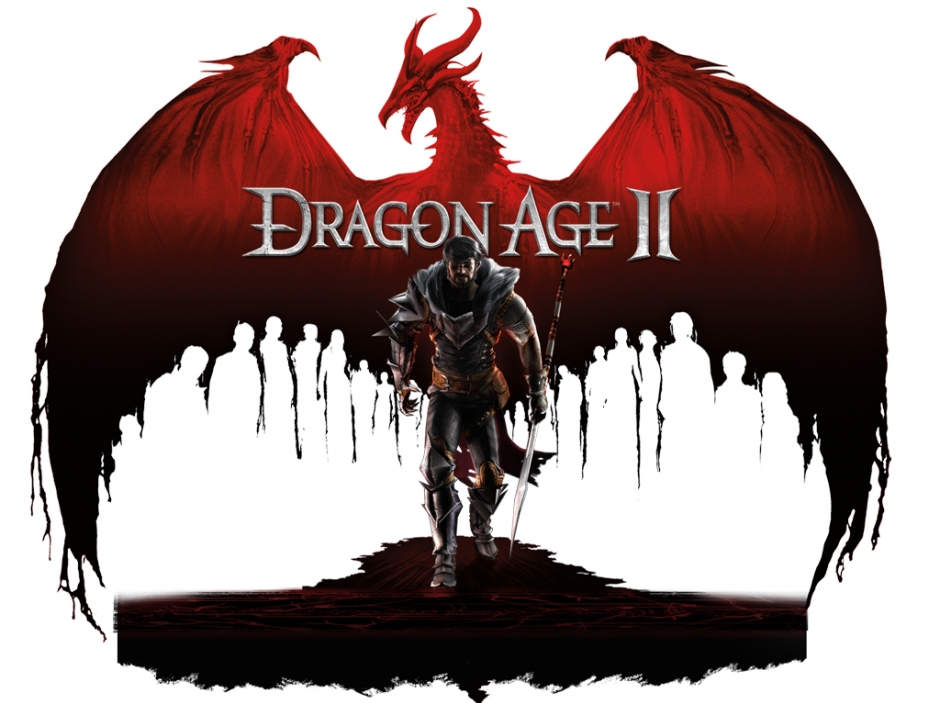
Dragon Age may self-identify, in name at least, as a sequel. Yet every aspect of this disappointing game feels like a throw-back to an earlier generation of less interesting, less capable games that hadn't experienced the demands, compelling story-telling, and ground breaking game play of the original Dragon Age.
The creative arc of the Dragon Age series seems to be taking its cues from the plot of Benjamin Button. Instead of maturing, each game seems to be less capable, less well executed, and less deep than the previous.
Consider the technical proficiency of the games: Dragon Age played flawlessly on my PC, no mean feat for a complex game that made serious computational and graphic demands. Then came the expansion pack, Awakenings. My computer can't play it for more than ten minutes without crashing, often locking up in less than sixty seconds. Worse, Awakenings worked some sort of programming magic on my copy of Dragon Age Origins so that it, too, constantly crashes.
I installed Dragon Age II on a new Windows 7 64 bit system. Large swatches of the terrain would appear as black blobs. Shadows of characters would overlay in bitmap form over the scene, often making game play impossible to follow. Worse, the game crashed. Constantly.
Yes, I downloaded the hi-rez textures. Yes, I had all my drivers up to date. Yes, I lowered the graphic settings to approximate an Xbox. And, yes, that did help somewhat. Yet, should any consumer have to go through so many steps (and downgrades) to get a top-tier game to work?
The traditional RPG game model hasn't changed that much since Wizardry was released on the PC decades ago. You go into a cave/dungeon/hall and are confronted with demons/soldiers/wizards that you must fight. At the end of the battle you are rewarded with loot and experience points.
What made Dragon Age so compelling was that this mundane model was transformed into an epic tale, masterfully told, with surprises, twists, and characterization that went beyond the stale, threadbare stereotypes that came before. Starting with one of several "prequels", the game invested the gamer in the unique story and character they had helped to create. By the time the bigger story began to unfold, the player had learned the basics of game play and developed an emotional bond and back-story resonated throughout the entire game.
Dragon Age's story grew from the particular problems facing the player, to a world crisis that only the player could resolve. The fundimental problem facing the player was to ensure that as the character's problems grew, so did his capabilities. Make the wrong choices and your player might not reach the end of the journey in one piece.
The settings in Dragon Age were huge, popluated, and distinct in the same way that the worlds of "Empire Strikes Back" were so alive, memorable and different from each other. There was a dazzling array of enemies and character types, even mages transformed into dragons. Just when you thought you had the game figured, it would strip you of your weapons and send you into a shadow world of the fade, or trip you up with a moral dilemma returned to the roost. Puzzles, weapons, armor, and inventory management, and the best combat system I've ever played, made it an adventure, a novel, a puzzle, and an action movie all in one.
At the heart of Dragon Age was the idea of "choice". You made it your own adventure at every turn. What was your back-story? What did you look like? How would you respond to tough, value burdened choices? What armor would you wear? Who would you allow into your party and what would they use for armor and weapons? The "choice-making" was not just a plot device; the game encouraged you to make second by second decisions as to which attack, which spell to use, and there were consequences to those choices: an area effect like a firestorm might hurt your enemies, but also your companions as well.
One might have thought it would have been easy to take the basic engine and build on it, focusing on story rather than technology.
Instead, Bioware reinvented Dragon Age. They sent it through a wormhole and what emerged on the retail floor is an alternate universe where just about everything is not quite right, not as much fun, not as immersive, not as challenging as the first.
Perhaps the original design was too PC-centric for the age consoles, the original story too long, the combat too difficult. What we're left with is a simulacrum of the original, lacking in depth, creativity, and quality execution.
The plot follows the decades-long story of your character, a refugee from the blight that threatened civilization i the first game. Your generic character starts with the generic handful of skills and spells. You'll face plot-advancing-adversity and slowly work your way up from smuggler to champion. You'll help elves and dwarves in various side quests and deal with the tensions between religion and magic that were also present in the first game.
The story feels like a thousand generic Dungeons and Dragons canned scenarios thrown into a food processor and reordered at random. The tasks seem smaller than before, and the villains are less grotesque, less interesting, more like cardboard cut-outs.
Gone is the multi-breasted brood-mother, replaced by a less than fearsome giant spider. A nicely drawn species of giants has been added to the game, but they seem to just be reskinned versions of every other creature you fight.
One of the ways that choice was made so important in the first game was the selection of armor and weapons for your combat party. For some reason in Dragon Age II most of the armor and weapons that you find can only be used by your primary character. This lessens your ability to make the story your own and takes a lot of the fun out of treasure hunting as well. The armor I used most often I found early on in the story. I rarely had a need to change it. Likewise, gathering money didn't do you much good if the things you could buy only helped one character.
Though the game does draw dividing lines between church and state, there are also demons floating around the plot, too. It's not always clear who summoned them or if they were there for any purpose but to give you something to attack. Interestingly, you are tempted to take up blood magic at several points. However, there never seems to be a compelling reason to take up the dark arts, particularly when everyone who has tried has turned into a monster.
Like the previous game you can have runes applied to give your weapons and armor more power, but this is a much simplified system with only one slot per item, and no reusability of runes.
Though the game still permits the play-n-pause hybrid method of combat championed in the original, the thrust is toward action/arcade rather than second-by-second micro-management. Load up your party with a tank, a fire-tossing mage and perhaps someone else to heal and you're going to win most fights without any management at all, at least on normal levels. In Dragon Age, I sometimes pulled out a battle with just one character in my party still alive, mana almost all gone or stamina on empty. It made the feeling of accomplishment even stronger. Here, the game nearly plays itself. At the higher levels things get more sophisticated, but my sense was that this mode was not integral to the game's design, more of a nod to fans of the original.
As mentioned earlier, I wasn't able to play the game at high rez despite being on a high end system. The graphics were certainly not earthshaking, and I was very surprised to be running the same maps over and over as the game repurposed them to different scenarios. Also disappointing were the many NPCs in the city who fail to react at all to the spectacle of violence and magic taking place in front of them. They never move.
A disappointing title to be sure. Dragon Age II launched with downloadable material. Perhaps it would have been better to get the basic game working before spending time on extra ways to take consumer's cash.